ServicesWater Softeners
Water Softeners in Flower Mound
Hard water minerals cling to fixtures, cloud your dishes and collect as sediment in your water heater. We test the hardness at your tap, size a softener to your home and put the full scope and price factors in writing before any work begins.
When a softener is the right fix
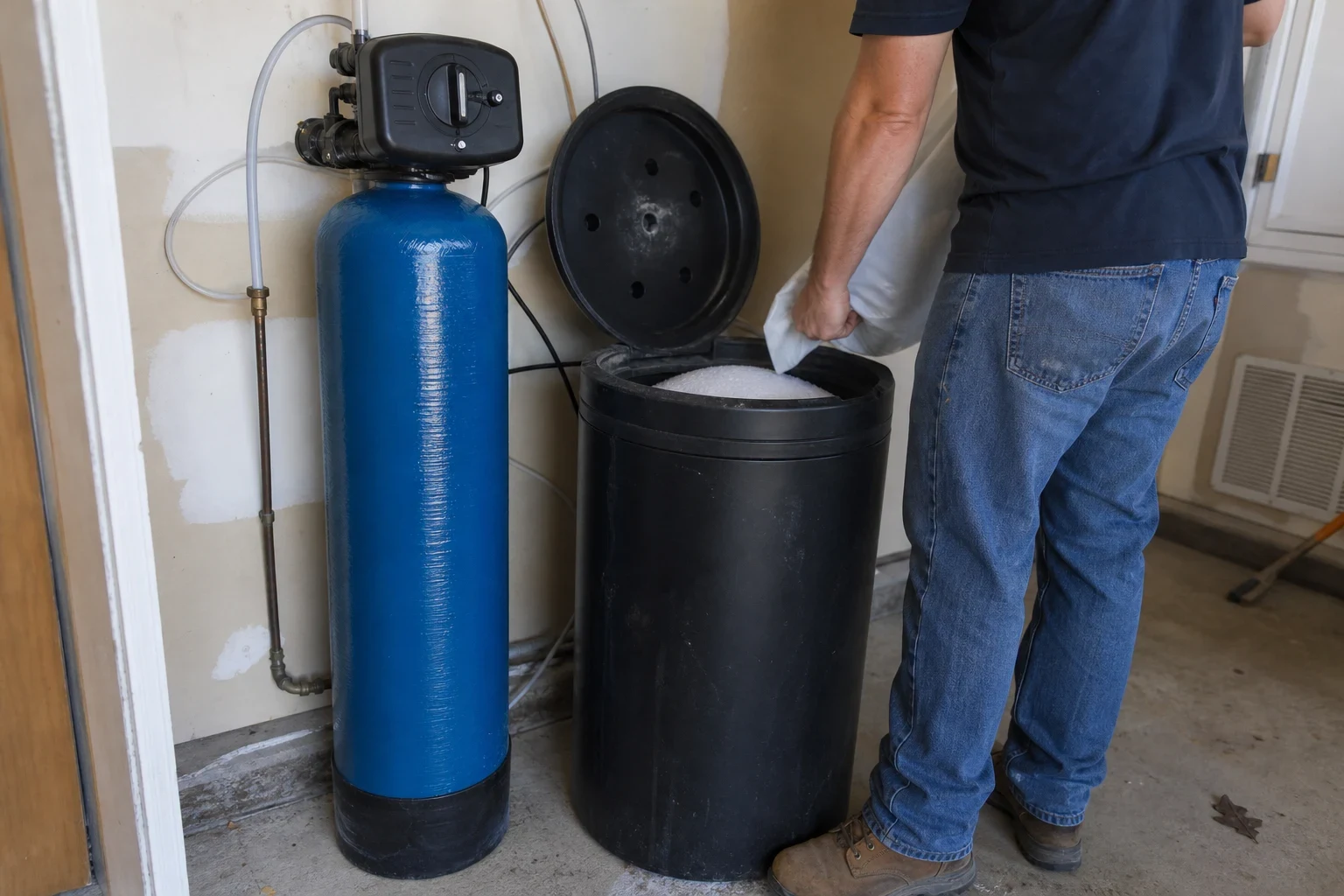
Water moving through a softener passes over a bed of resin beads. The beads hold onto calcium and magnesium, swapping in a small amount of sodium, or potassium if you prefer it. Those hardness minerals are what leave scale in pipes, on shower glass and inside anything that heats water. Once they're gone, soap lathers again, fixtures stay cleaner and your water heater runs with less buildup.
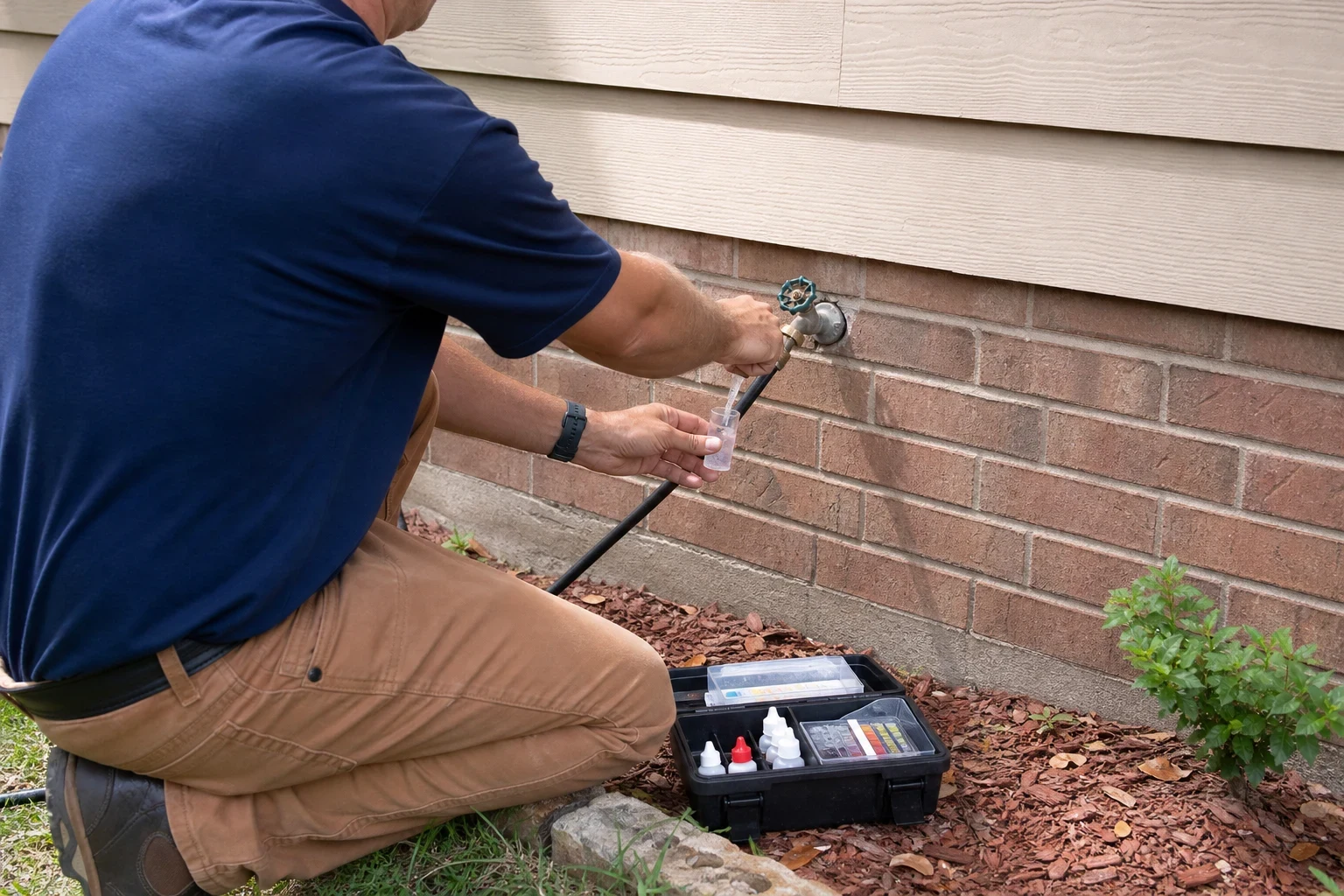
Hardness can differ from one house to the next, so we don't guess. We measure it in your home first. If the number doesn't justify a softener, we tell you, and if your real complaint is chlorine taste, whole-home filtration may be the better match.
Before we touch a pipe, you get a written quote that spells out the unit, the install work and what upkeep looks like. Nothing gets added on the day.
What a softener install covers
Hardness reading at your tap
We measure hardness in grains per gallon and note iron if it shows up. That number drives the size of the system.
Sizing for your household
We match the resin capacity to your hardness and how many people live in your home. An undersized unit regenerates too often and wastes salt, while an oversized one costs more than it should.
Bypass valve and plumbing tie-in
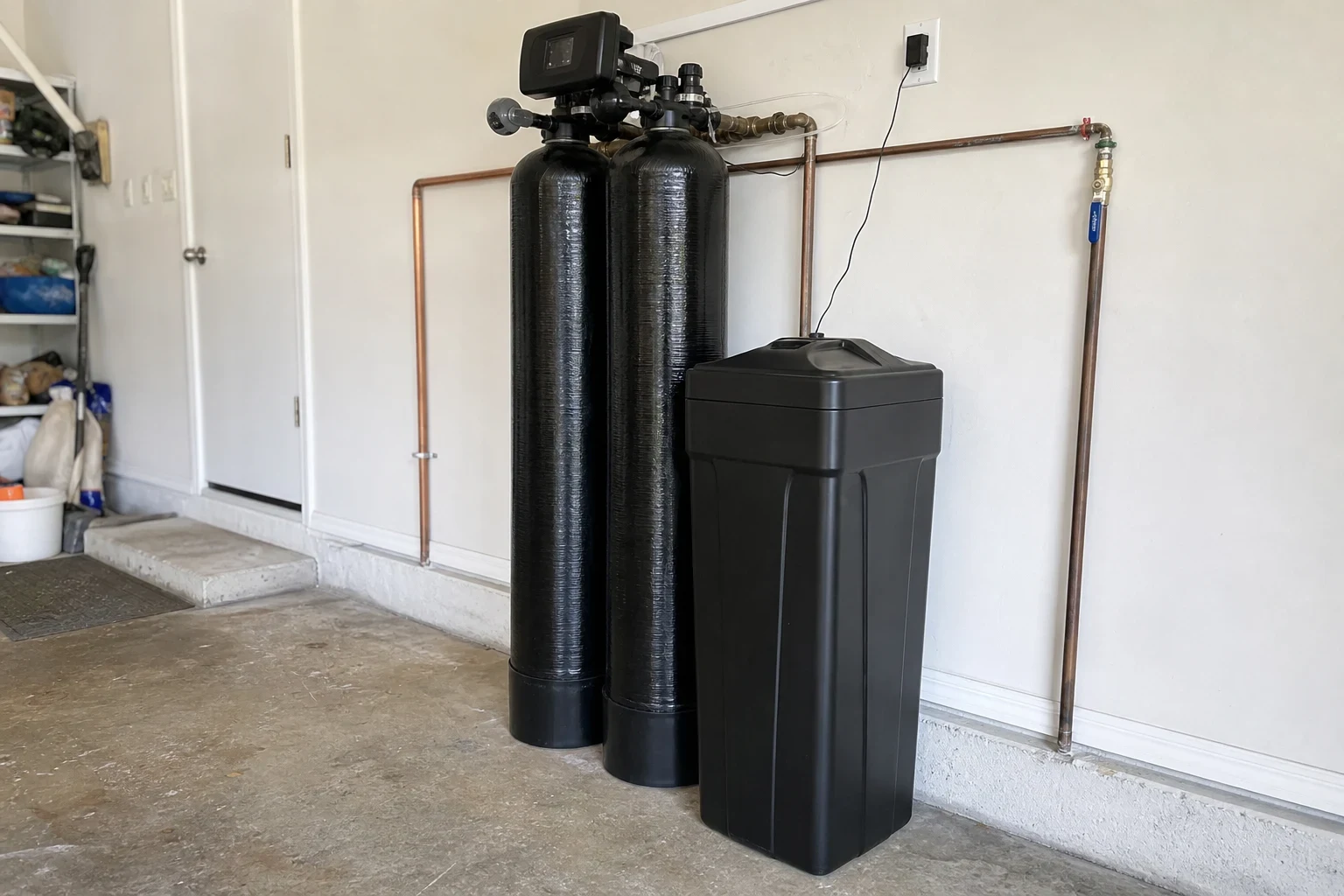
We connect the softener where your main line enters the house, usually in the garage, and add a bypass valve so you can shut it off without cutting water to your home.
Drain line and brine tank setup
The softener needs a drain for its regeneration cycle and a spot for the salt tank. We route the drain to code and set the tank where you can refill it easily.
Programming and a walkthrough
We set a metered regeneration schedule based on your actual water use, then show you how to add salt and read the control panel.
Signs your home has hard water
- White crust on faucets
- Chalky rings around faucet bases and showerheads are mineral deposits left behind as water dries.
- Film on glasses after a wash
- When drinking glasses leave the dishwasher dull or dotted with dried marks, leftover minerals are a common cause.
- Soap that won't lather
- Hard water fights soap and shampoo, so you use more and still feel a residue on your skin and hair.
- A water heater that pops and crackles
- Minerals gather as sediment on the tank floor and crackle as the burner or element heats them. That layer makes the heater work harder and can cut its service life short.
- Stiff laundry and faded colors
- Minerals trapped in fabric make towels scratchy and dull darker clothes after repeated washes.
- Clogged aerators and showerheads
- Weak flow from a faucet that used to run fine can mean scale is blocking the small openings.
How it goes from first call to soft water
- 1
A quick phone conversation
You tell us what you're seeing around the house, and we set a time to come out and test your water.
- 2
Testing and a plumbing check
We take a hardness reading at a kitchen tap. Then we find the spot where water enters your home, check how close a drain sits and see whether there's an outlet within reach.
- 3
Your written quote
You get the recommended unit, the install steps and every factor that affects the price on paper. Take your time with it. If something changes, we talk it through with you before doing any extra work.
- 4
Install day
A typical softener install takes part of a day. We close the main valve, plumb in the bypass and the softener, route the drain line, add salt to the brine tank and flush the system. Before we leave, we tidy the area where we worked.
- 5
Settling in
After the first regeneration cycle, the softened water reaches every tap. Give us a call if anything about the system seems off.
What goes into a softener's price
Homes differ in how their plumbing runs and how much water they use, so we set a softener price only after seeing your setup. Every item below gets its own line on the written quote, so you can follow how the total adds up. Standard professional installation is included for qualifying homes, and we tell you up front whether your home qualifies.
- Your hardness and water use
- More grains per gallon and more water used each day both need a bigger resin tank, and a bigger tank means a higher unit price.
- Your existing plumbing
- A garage with a softener loop already in place keeps the work simple. Without one, we run new pipe to the main line.
- Distance to a drain and outlet
- The control valve needs an outlet, and the regeneration cycle needs a proper drain. If either is a long way from the softener's spot, the job takes more work.
- Pairing it with another system
- Some homeowners want whole-home filtration for chlorine taste as well as softening. If both are installed at once, we quote them as a single job so the full scope is in one place.
Water softener questions
- Will my water taste salty?
- Not in most homes. The amount of sodium a softener adds depends on how hard the water was to begin with, and at typical levels you won't taste it. If you'd rather avoid it in drinking water, a reverse osmosis system at the kitchen sink removes it.
- Does a softener remove chlorine?
- No. A softener targets hardness minerals, not chlorine taste or odor. If chlorine bothers you, we can talk through whole-home filtration, either alongside a softener or on its own.
- How much upkeep is involved?
- Mostly salt. Every so often you'll pour a bag into the brine tank, and the interval depends on your hardness and daily water use. We'll show you a quick way to check the level. Now and then a hard crust can form inside the tank, and breaking it up with a broom handle keeps regeneration working.
- Where does the softener go?
- In most homes, it goes in the garage near where the main water line comes in. We need floor space for two tanks, a nearby outlet and a drain. We confirm the spot during the visit and note it on your quote.
- What if my test shows I don't need one?
- Then we'll say so plainly. A softener only earns its keep when hardness is high enough to cause problems. We'd rather point you toward what actually fixes your complaint.
Learn the real hardness of your water
We test your water, go over the result with you and write up the softener option so you can decide when you're ready. The full scope is clear before any work begins.